Introduction
For decades, the biggest hurdle to better hearing wasn’t the technology—it was the look. The “stigma” of the bulky, visible hearing aid kept thousands of people from engaging with the world around them.
But as we move through 2026, we have officially entered the “Stealth Era” of audiology. Today’s devices have more in common with high-end wireless earbuds than the medical hardware of the past. In fact, most people won’t even know you’re wearing them.
The Rise of "Invisible-in-Canal" (IIC) Technology
The pinnacle of discreet design is the IIC (Invisible-In-Canal) device. These are custom-molded to the unique shape of your ear canal and sit deep enough that they are virtually undetectable from the outside.
These aren’t just smaller; they are smarter. Despite their size, they house processors capable of millions of calculations per second, automatically adjusting as you walk from the quiet of the Fernkloof Nature Reserve into a bustling Hermanus restaurant. Because they sit inside the canal, they utilize the ear’s natural anatomy (the pinna) to collect sound, providing a more “organic” and directional hearing experience than devices that sit behind the ear.
The "Aesthetic" Shift: From Medical Device to Wearable Tech
While we often think of hearing as a passive activity, it is actually an active neural process. When your auditory system is strained, your brain’s prefrontal cortex—the area responsible for decision-making and focus—has to step in to help the auditory cortex. This “borrowing” of brainpower means you have less mental energy available for other tasks, like remembering what was just said or reacting quickly to a joke. It’s essentially like trying to run a high-end software program on a computer with a failing processor; eventually, the whole system starts to lag.
The "Aesthetic" Shift: From Medical Device to Wearable Tech
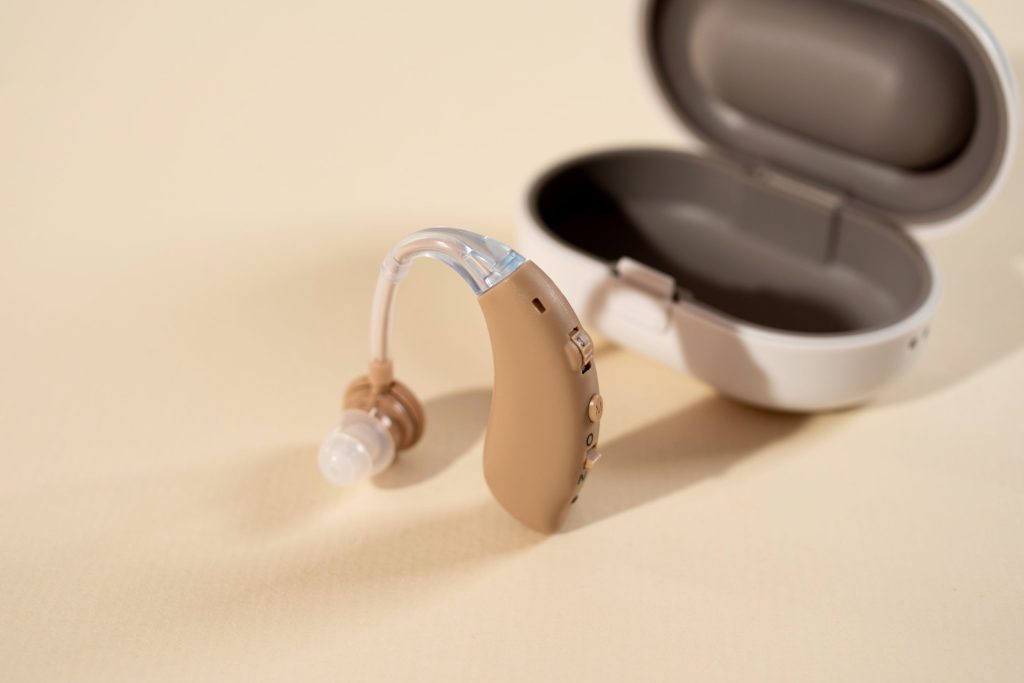
For those who don’t need a completely invisible fit, the industry has undergone a radical design overhaul. We’ve moved away from “skin-tone” plastics that never quite matched anyone’s skin, toward materials that embrace modern tech aesthetics.
Slim-RIC Designs:
These "Receiver-in-Canal" devices now feature elongated, graceful curves that follow the contour of the ear.
Metallic & Matte Finishes
Think brushed champagne, graphite, and deep charcoal.
The "Earbud" Crossover
Some 2026 models are designed to look exactly like high-end fitness trackers or earbuds, leaning into the "hearable" trend.
The Engineering Feat: How Everything Fits
You might wonder how a device smaller than a coffee bean can outperform the bulky units of five years ago. The answer lies in Nanoscale Integration.
In 2026, we utilize System-on-a-Chip (SoC) architecture. This means the microphone, the power amplifier, the digital signal processor (DSP), and the Bluetooth antenna are all integrated onto a single silicon wafer. This reduction in hardware footprint allows for larger battery life in smaller shells, and more room for sophisticated sensors that can track your movement and adjust the 360-degree soundscape in real-time.
The Hidden Cost of "Pushing Through"
The danger of ignored listening fatigue isn’t just tiredness; it’s social withdrawal. When listening becomes a chore, we subconsciously start avoiding the situations that cause it. We skip the book club, stay home from the market, or stop contributing to the dinner table conversation. This isolation is a leading factor in the link between hearing loss and cognitive decline.
The Role of Modern Auditory Support
A common misconception is that “small” means “disconnected.” In reality, these stealth devices act as a bridge to your entire digital life.
Through LE Audio (Low Energy Bluetooth), your invisible hearing aids become high-fidelity speakers for your smartphone, tablet, or even your smart TV. Imagine walking through the Hermanus Saturday Market while receiving turn-by-turn navigation prompts or a phone call directly in your ears, with no one around you realizing you are connected. This “secret” connectivity provides a significant professional and social edge.
Why "Discreet" is More Than Just Vanity
Choosing a discreet device isn’t just about looking younger—it’s about Cognitive Confidence. When you aren’t worried about people “noticing” a device, you are more likely to:
- Lean into Conversations: You stop subconsciously pulling away from the table or turning your "good ear," which reduces social anxiety.
- Wear Devices Consistently: The brain requires a "settling-in" period to learn how to process new sounds. If a device is comfortable and invisible, you are more likely to wear it 12+ hours a day, leading to much faster neural adaptation.
- Reduce Mental Load: As we discussed in our post on Listening Fatigue, when you feel confident and the sound is clear, your brain stops "guessing" and starts engaging.
Is Stealth Tech Right for You?
While invisible technology is more accessible than ever, it isn’t a one-size-fits-all solution. Candidacy depends on three main factors:
- The Shape of Your Ear Canal: Some canals are too narrow or have sharp bends that make IICs difficult to fit.
- The Degree of Loss: While IICs are powerful, those with profound power needs might still benefit from a slightly larger "Power-BTE" (Behind-the-Ear) model.
- Manual Dexterity: Because these devices are so small, they require a steady hand to change the tiny batteries or clean the wax filters.
Conclusion: Empowering Your Lifestyle with Invisible Innovation
The transition into 2026 has proven that hearing care no longer requires a compromise between performance and style. We have moved past the era of choosing between “seeing” a device and “hearing” the world. With the advent of Stealth Tech, the focus has shifted back to where it belongs: on the person, the conversation, and the connection.
Whether you opt for the total invisibility of an IIC custom mold or the sleek, designer profile of a Slim-RIC, these devices are built to integrate seamlessly into your life. They provide the cognitive support your brain needs to avoid fatigue while maintaining the aesthetic discretion you desire. In Hermanus, where our lifestyles are as active and social as ever, these “invisible command centers” ensure you never have to miss a moment or a whisper.
Frequently Asked Questions
1. Will an invisible hearing aid make my ears feel "plugged up"?
This is a common concern called the “occlusion effect.” However, modern IIC (Invisible-in-Canal) devices are professionally vented to allow natural air and sound pressure to move through the canal. Because they are custom-molded to your exact anatomy, they usually feel more like a natural part of your ear than a foreign object.
2. Is the battery life shorter because the devices are so small?
While the physical batteries are smaller (typically a size 10), 2026’s ultra-efficient microchips mean you still get a full 3 to 5 days of use per battery. For those who prefer rechargeability, many “Slim-RIC” models offer a full day of power with a quick 30-minute charge, though the very smallest invisible models still primarily use replaceable zinc-air batteries to maintain their tiny footprint.
3. Can invisible hearing aids handle loud, windy environments like the Hermanus cliff paths?
Yes. In fact, because IIC models sit deep inside the ear canal, the outer ear (the pinna) acts as a natural shield against wind noise. Additionally, 2026 wind-reduction algorithms are much more sophisticated than in previous years, specifically identifying and suppressing wind turbulence while keeping speech clear.
4. If the device is deep in my ear, how do I get it out?
Every invisible hearing aid is equipped with a tiny, transparent “removal cord”—essentially a thin, strong nylon line that is virtually invisible to others. You simply use your thumb and forefinger to gently pull the cord, and the device slides out easily.
5. Are invisible hearing aids more prone to damage from earwax?
Because they sit deep in the canal, they do require a bit more maintenance. However, they come equipped with advanced, replaceable CeruShield or wax guard systems. As part of your care at our clinic, we teach you exactly how to swap these filters in seconds to keep your tech running at peak performance.