Introduction
Navigating end-of-year celebrations, lively restaurant dinners, and family reunions can be equal parts joyful and exhausting—especially when managing hearing loss. The festive season brings unique auditory challenges: background music, overlapping conversations, clattering dishes, and acoustic environments that are rarely designed with hearing health in mind.
Optimize Your Hearing Technology Before the Events
Before the holiday rush begins, ensure your devices are tuned and ready for dynamic, high-noise environments.
Schedule a Pre-Holiday Fine-Tuning:
Visit your audiologist to update your device programs. Request or adjust specific programs for "Speech in Noise" or "Restaurant/Party Mode", which narrow the directional microphone focus and optimize noise-reduction algorithms.
Master Directional Settings & App Controls:
If your hearing aids connect to a smartphone app, practice manually adjusting directional microphone focus toward the person speaking in front of you and turning down ambient background noise.
Utilize Assistive Accessories:
Pack a “Festive Hearing Kit”: Always carry spare batteries or a fully charged portable charging case, extra domes, wax guards, and a soft cleaning cloth in your bag or pocket.
Remote Microphones / Companion Mics:
Ask a host or speaker to clip on a small wireless mic, or place it in the middle of a dinner table to stream clear voice audio straight to your devices.
TV Streamers:
If gathering to watch holiday movies or sports, connect a dedicated TV streamer so you can listen at a comfortable level without turning up the main room volume for everyone else.
Practical Communication Strategies
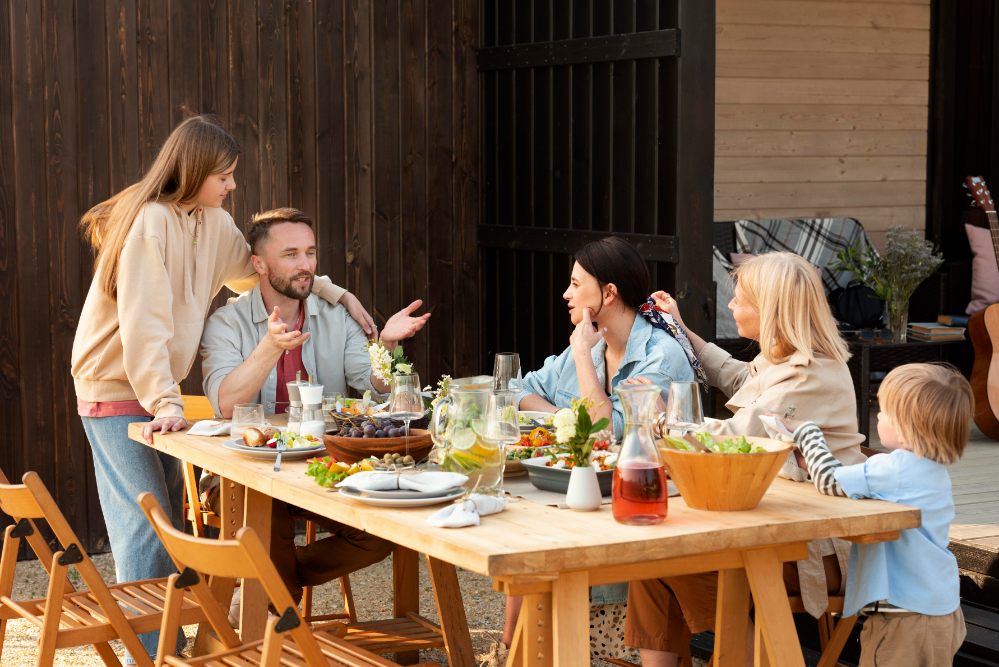
Where you sit and how you interact during a gathering makes a massive difference in how well you process speech.
Where you sit and how you interact during a gathering makes a massive difference in how well you process speech.
| Strategy | Action Plan | Why It Helps |
| Strategic Seating | Sit with your back against a wall or quiet corner, away from kitchens, speakers, or doorways. | Reduces background noise coming from behind you and gives your directional microphones a clear path forward. |
| Favorable Lighting | Position yourself so light falls directly on the faces of speakers rather than behind them. | Facial expressions and lip movement provide vital visual cues to supplement what you hear. |
| Round Table Layouts | Choose or advocate for round or oval seating arrangements over long rectangular tables. | Maintains line-of-sight to multiple conversational partners without obstruction. |
| Proactive Communication | Inform close family members or hosts ahead of time about your preferred seating or communication needs. | Sets realistic expectations and prevents awkward readjustments in the middle of a meal. |
Preventing Listening Fatigue and Social Exhaustion
Listening in noise requires continuous brain power to fill in missing phonetic gaps. This process, known as cognitive load, often leads to intense mental exhaustion, headaches, or withdrawal by the end of an evening.
High Ambient Noise ➔ Brain Fills Speech Gaps ➔ Increased Cognitive Load ➔ Listening Fatigue
Managing Acoustics and Environment (Host & Guest Guide)
Whether hosting at home or choosing a venue, simple environmental adjustments can dramatically reduce ambient noise and echo.
- Soft Softens Sound: Hard surfaces (hardwood floors, glass, bare walls) cause speech sounds to bounce around, creating reverberation. Soft furnishings—such as rug runners, tablecloths, seat cushions, and curtains—absorb excess sound and lower background noise.
- Tame Background Audio: Turn off or lower background music, particularly music with heavy bass or lyrics. If music is desired, select instrumental acoustic tracks and keep the volume low enough that guests don't need to raise their voices.
- Designate a "Quiet Zone": If hosting, set aside a smaller room (like a study, den, or sunroom) away from the main party area as a low-noise zone where guests can hold quieter conversations without competing against background clutter.
Tinnitus and Acoustic Protection During Holiday Events
End-of-year festivities often feature loud sound environments—such as live music, fireworks, cheering crowds, or blasting sound systems—which can trigger or worsen tinnitus and temporary hearing shifts.
Loud Festive Noise ➔ Inner Ear Overstimulation ➔ Tinnitus Flare-ups & Listening Strain
Protect Against Excessive Volume: Keep a pair of high-fidelity earplugs (or acoustic filters) in your pocket. Unlike foam plugs, high-fidelity plugs lower decibel levels evenly across frequencies, preserving speech clarity while protecting your ears.
Manage Tinnitus Flare-ups: If tinnitus spikes in a noisy venue, retreat to a quiet space and use low-level sound therapy (such as a gentle rain or ocean wave app on your smartphone with open-fit earbuds) to help mask the ringing.
Keep Alcohol and Caffeine in Check: High intake of alcohol, sodium, and caffeine during holiday meals can temporarily affect inner ear fluid pressure and circulation, potentially intensifying tinnitus symptoms.
Conclusion
Managing hearing health during the festive season isn’t about avoiding celebration—it’s about giving yourself the tools, environment, and mindset to stay connected without feeling overwhelmed. By fine-tuning your devices in advance, positioning yourself strategically in social settings, and taking periodic auditory breaks, you can protect your energy and focus on what truly matters: enjoying rich, meaningful connections with friends and family.
Frequently Asked Questions
1: What should I do if I can’t hear the person sitting directly across from me at dinner?
First, politely let them know that background noise makes it difficult to hear clearly across the table. Ask if you can swap seats to sit adjacent to them, or move closer to a quieter end of the table. You can also switch your hearing aid settings to “Speech in Noise” or “Party Mode” and narrow the microphone focus directly toward them using your smartphone app.
2: How can I tell family members how to help me without feeling like a burden?
Be proactive and specific before or at the start of the gathering. Frame your request around connection rather than disability—for example: “I really want to catch up with everyone tonight! It helps me a lot if we look at each other when talking and speak one at a time.” Most loved ones are more than happy to adjust once they know what specifically helps you stay included.
3: Why do I feel so exhausted after just two hours at a party, even when wearing hearing aids?
This is caused by listening fatigue (or cognitive overload). Hearing aids amplify sound, but your brain still works overtime to filter out background noise, decode speech fragments, and follow fast-moving group conversations. That continuous mental processing burns a significant amount of brain energy, leading to physical and mental fatigue.
4: Will background music really make that big of a difference to my hearing?
Yes. Music—especially tracks with vocal lyrics, drums, or heavy bass—occupies the exact same frequency range as human speech. This creates acoustic masking, forcing your brain and your hearing aids to struggle to separate voices from the music. Turning background music down or switching to soft, instrumental acoustic music dramatically improves speech clarity for everyone.
5: What is the best way to handle loud events like live bands or fireworks displays?
Wear high-fidelity acoustic earplugs. Unlike standard foam earplugs that muffle all sound, high-fidelity plugs lower the overall volume evenly across all frequencies, preserving audio quality while protecting your ears from dangerous decibel levels. If you wear hearing aids, you can lower the master volume or mute them temporarily during extremely loud segments.